Royal Wootton Bassett
United Reformed Church @ 200
Who are we? What do we believe?
Written By Rev'd Roy Lowes
Our Building’s 200th Anniversary on 26th October 2025.
WHERE HAVE WE COME FROM?
It is often said these days that we live in uncertain and worrying times. I’m sure that’s true - but I think what is also true is that for most of human history there have been more times that are worrying and
uncertain than not. That was true of the period which gave birth to Congregationalism. For what we are celebrating today is the building of this Church as a Congregational Church in 1825. Of course, up until the Reformation the western world had but one Church - the Roman Catholic Church. Many who were part of the church were striving to reform it and when it resisted, the church splintered. In
England under the guidance of Henry the 8th (our own Tudor version of Trump!) the Church severed its ties with Rome and eventually established a state Church with the monarch as its head. This church
both adopted some of the principles of reform, like having its worship and prayer books in the language of the people rather than Latin but also kept a lot of the structures of the Roman Church. It's Bishops for example and the complexities of its liturgy.
Many Christians felt that these Church of England reforms had not gone far enough and Congregationalists were amongst those. They believed that there was no reason why a local congregation of people of faith, gathered together, could not be sufficient to ‘be Church’ and be a light to their local community. They were indeed initially called ‘Independents’.
Their worship was simpler, gathered around the Bible, the way they governed themselves was through their Church Meeting. Like many churches of the reformation, they felt no need to have a priest
interceding between them and God but had a minister who ministered to the congregation as they developed their own Christian lives. These Congregationalists were strongly represented in the Mayflower which sailed to America in 1620 and played an outsize part in the founding of the United States. These people played an outsize part too in the Civil War on the side of Parliament, indeed its thought that Oliver Cromwell was an Independent. They therefore played a significant role in the establishment of our parliamentary democracy. Amongst their number was John Milton the poet and writer of Paradise Lost and a government minister during the Commonwealth period. They included
some of our greatest early hymn writers like Isaac Watts and Philip Doddridge.
But these Christians who wanted to take the reformation further together with Roman Catholics who didn’t want any reformation at all, were for many years after King Charles the second brought back the monarchy, persecuted and not able to worship freely or fully. In 1676 it is recorded that there were 8 Congregationalists who were worshipping somewhere in Royal Wootton Bassett. They were the embryonic community of this church. These eight people and their successors continued as a
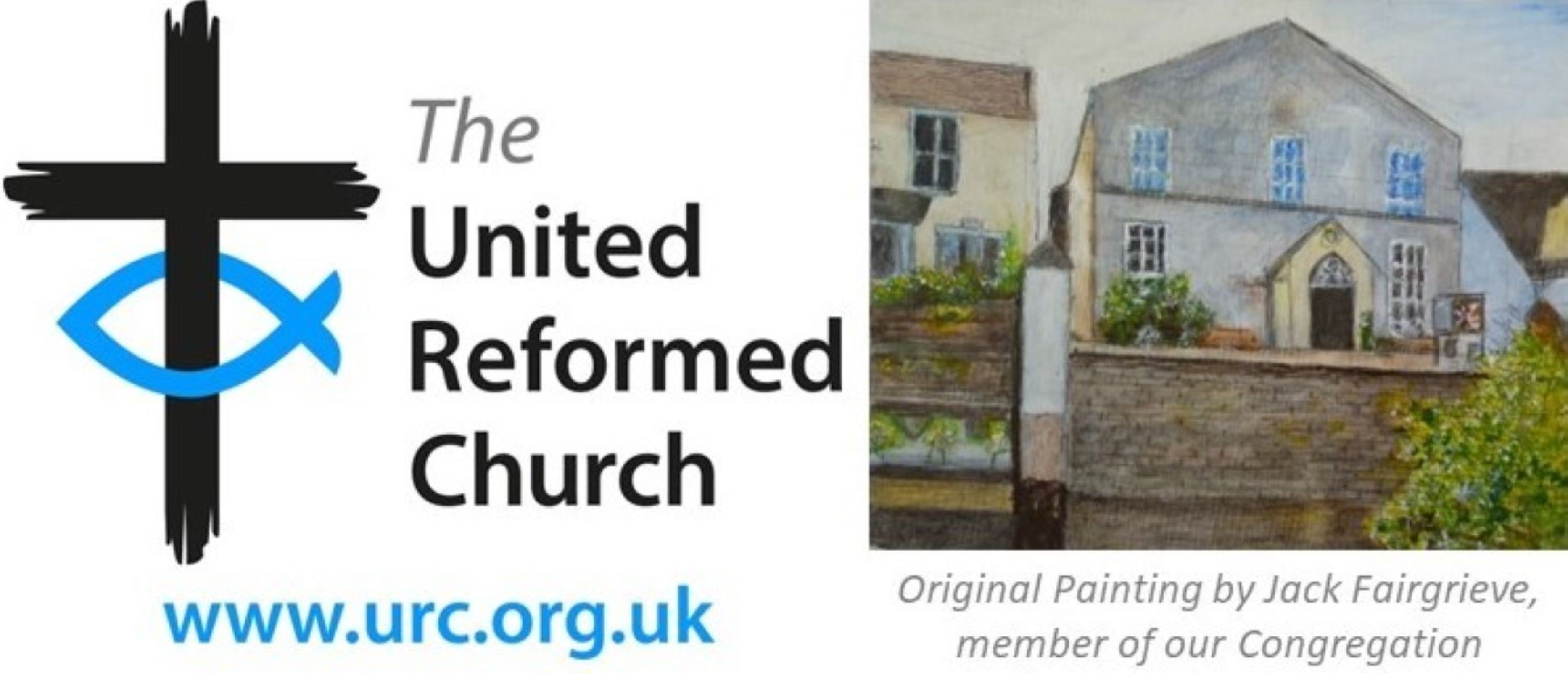
community with no real fixed worshipping abode for over a century. Until in 1779 they were granted permission and a license to use a building referred to as a tenement, here at this end of Wood Street, near to the house called Priory Cottage - which is on the site of a mediaeval daughter house of Malmsbury Abbey. Then in the early part of the 19th century they found the wherewithal to consider erecting their own building - and here it is, still standing 200 years later. And this is what we
celebrate.
We also know of course that during the 20th century there was a strong movement to bring churches together and reunite the divisions of the churches after the reformation. Hence the founding of the World Council of Churches in the 1940s. The Church of England and the Methodist Church (Methodism having sprung from the Church of England), tried to come together in the late 1960s and didn’t quite make it. But in 1972 after long running conversations between Congregationalists and Presbyterians in England at Wales most Congregationalists and all Presbyterians succeeded in forming the United Reformed Church. Both had to give up things for the sake of unity, including for Congregationalists there being independent. This Church joined and has been part of the United Reformed Church ever since.
Two footnotes to add. When this building was erected, it was given the name Hephzibah. It is a Hebrew name. It was the name of the mother of King Manessa in the Old Testament. It seems to mean ‘my delight is in her’. And the word Hepzibah has been used in the Old Testament to refer to Jerusalem itself as the source of their delight. The people who built this Church were clearly delighted to have done so, loved this place and hence referred to her as Hepzibah. And many, locally down the years, have referred to her, as the old lady of Wood Street.
Secondly to note that sometimes these days on a Sunday morning our congregation is very small. We’re doing well if it’s 15 and would throw a party if it’s 20! It’s often just 10 and that feels thin. But I want to record the fact that as I mentioned earlier, when the first people gathered to worship here in the 17 th century there was only eight of them. And when at the beginning of the 19th century, the Revd Martin Slater took the brave decision to erect this structure, according to the history I’ve read,
he took the decision with the backing of his six(!!) regular attenders. So, I want to point out that this Church has doubled in size in the last 200 years!! And is on an upward trajectory!! I’m just giving a shout out for historical perspective - and hope.
WHO WE ARE – WHAT IS OUR ETHOS?
So, as we are neither Congregational nor Presbyterian but a union of
both. What now is our Ethos as a United Reformed Church 200 years on
from this building being established? (NB The United Reformed Church
subsequently united with the Re-formed Association of Churches of
Christ in 1981 and the Congregational Union of Scotland in 2000). Well,
the clue is in the name. It’s not snappy! But it does what it says on the tin
- we are United - Reformed - and a Church.
We are a Church which, like all Churches, believes that Christ matters for all humanity to be able to live a good life and share well-being and the earth’s resources.
We seek to learn how to be neighbourly and show mercy to all who are in need - even our enemies.
We are a Reformed Church, part of the worldwide family of Reformed churches (including Presbyterian and Congregational Churches).
We believe we should be always open to reform following any new insights that flow from the gospel and save us from destructive ways of behaving.
Our denomination has had women ministers for over a century, has been open to remarry divorces for decades, and seeks to hold itself together across differences of opinion. There are, for example, people within the United Reformed Church who do not believe that homosexuality is God’s will but alongside them are many members and ministers who are gay and part of an LGBTQ+ community. We do not believe that hierarchy is always conducive to community life and our ministers are all paid the same stipend whatever the level of experience or authority that they carry.
We are United.
The church was founded with the coming together of Presbyterian and Congregationalists in England and Wales in 1972 and has been joined by Churches of Christ (known as Disciples of Christ in the United States) and Congregationalists in Scotland.
We try to make decisions by building consensus, which in a world addicted to empire building and the noise of strident views we believe is vital.